
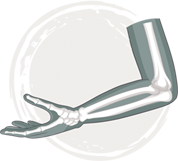
Hand & Upper Limb
CONDITIONS

Hand and upper limb conditions can cause distress, immobility and pain. Fortunately, there are several treatment options available, depending on the type of disorder, that are not just limited to surgery.
Types of Hand and Upper Limb Conditions We Specialise In:

Carpal tunnel syndrome
Carpal tunnel syndrome, a nerve compression disorder, occurs due to increased pressure on the median nerve. It causes a tingling or numb sensation in the fingers and thumb, weakness and pain. The pain and discomfort typically occur when grasping the steering wheel, holding a newspaper, or using a phone. It's important to be aware of these symptoms and seek medical advice if you experience them. The uncomfortable sensation may travel from the wrist to the arm.
Cubital tunnel syndrome
Cubital tunnel syndrome, much like the discomfort of hitting your funny bone, is caused by compression or irritation of the ulnar nerve. This condition may be triggered by excessive bending of the elbow or an elbow injury. Other potential causes include dislocation or fracture of the elbow, arthritis, or bone spurs. The symptoms of cubital tunnel syndrome typically include tingling or numbness in the ring finger, hand pain, a weakened grip, and pain on the inside of the elbow.
Radial tunnel syndrome
Radial tunnel syndrome, a type of compression neuropathy, develops due to excessive pressure on the radial nerve. It results in weakness of the forearm, a deep, burning sensation and pain, particularly when moving the forearm and wrist. The disorder, which underscores the importance of recognising symptoms early, can be managed effectively when identified and treated promptly.
Trigger finger
Trigger finger, a common condition, occurs when the finger remains in an abnormal bent position. While the ring finger and thumb are most commonly affected, any finger may be involved, and it’s not just limited to those digits.
Trigger finger develops when the tendon responsible for finger movement cannot slide smoothly within the sheath. This can occur due to inflammation of the tendon sheath, often caused by repetitive gripping or forceful use of the hand, or if a tiny bump, known as a nodule, develops on the tendon. You are at a higher risk of trigger finger if you have low thyroid function, rheumatoid arthritis or diabetes.
Trigger finger develops when the tendon responsible for finger movement cannot slide smoothly within the sheath. This can occur due to inflammation of the tendon sheath, often caused by repetitive gripping or forceful use of the hand, or if a tiny bump, known as a nodule, develops on the tendon. You are at a higher risk of trigger finger if you have low thyroid function, rheumatoid arthritis or diabetes.
De Quervain’s tenosynovitis
De Quervain's tenosynovitis, a painful condition, affects the tendons near the thumb side of the wrist. This can significantly impact your daily activities, as with this type of disorder, you may experience pain when grasping onto anything, making a fist or turning your wrist.
Repetitive hand and wrist movements, such as those involved in gardening or playing racquet sports, are closely linked to the development of De Quervain's tenosynovitis. These activities significantly increase one's risk of developing this painful condition.
Repetitive hand and wrist movements, such as those involved in gardening or playing racquet sports, are closely linked to the development of De Quervain's tenosynovitis. These activities significantly increase one's risk of developing this painful condition.
Dupuytren’s contracture
Dupuytren contracture is a hand disorder characterised by the fingers bending closer towards the palm and being unable to fully straighten. Bundles of tissue develop underneath the skin, forming a dense cord that pulls the fingers closer toward the palm.
Hand arthritis
Hand arthritis, a debilitating and degenerative disorder, can result in stiffness, swelling, and deformity of the hand. It's important to remember that medical professionals are there to support and guide you through the management of this condition.
Osteoarthritis, a type of arthritis characterised by the wear-and-tear process, causes the cartilage to deteriorate, leading to the tips of the bones rubbing against each other and causing painful friction. Rheumatoid arthritis, an autoimmune disorder, causes stiffness, pain, and loss of function in the hands.
Osteoarthritis, a type of arthritis characterised by the wear-and-tear process, causes the cartilage to deteriorate, leading to the tips of the bones rubbing against each other and causing painful friction. Rheumatoid arthritis, an autoimmune disorder, causes stiffness, pain, and loss of function in the hands.
Base of thumb arthritis
Thumb arthritis, a condition that develops when the cartilage at the base of the thumb wears away, can significantly impact your daily life. The loss of cartilage leads to painful bone-on-bone rubbing, causing swelling and discomfort. This hinders the smooth movement of your thumb, making simple tasks like opening a jar or turning a doorknob more challenging.
Flexor or extensor tendon injuries
Extensor tendon injuries, which are prevalent, can cause irreversible impairment of hand function, with a high probability without a treatment plan in place. An extensor tendon injury refers to the rupture of the extensor tendons, which may prevent you from extending the wrist and fingers.
Hand fractures
Hand fractures refer to breaks in the bones of the hand, which may occur due to sports injuries, sudden falls or motor vehicle accidents. A majority of hand fractures develop due to trauma, such as landing on an outstretched arm. With a hand fracture, you may experience several symptoms, including bruising of the hand, a hand deformity, swelling and pain. Being aware of these symptoms can help you identify a potential hand fracture.
Mallet finger
Mallet finger, also known as baseball finger, is a common condition that occurs due to a traumatic injury affecting the fingertip, causing it to droop downward. The position of the finger bears a striking resemblance to a mallet, hence its name. It occurs from an injury to the extensor tendon that facilitates extension of the fingertip. When there’s a tear in the tendon, you won’t be able to straighten the finger.
Boutonnière deformity
Boutonnière deformity affects several digits, including the ring, middle, index, and little fingers. It mainly arises from an injury to the tendon responsible for straightening the middle joint, typically due to a dislocation, laceration, or damage to soft tissue resulting from rheumatoid arthritis.
Gamekeeper's thumb
Gamekeeper’s thumb (skier’s thumb) arises from a traumatic injury to the Ulnar Collateral Ligament (UCL). This sturdy tissue band is a key player in thumb stability, attaching the thumb to the hand and reinforcing the thumb joint. An injury of this nature, which occurs when the thumb is forcefully bent backwards or sideways, can compromise the stability of the thumb due to the stretching or tearing of the UCL.
Scaphoid fracture
The scaphoid bone, a crucial component of wrist function, is a small bone located near the base of the thumb. A break in this bone, known as a scaphoid fracture, can significantly affect your daily activities. These fractures often occur when you break your fall and land on an outstretched arm. Depending on the severity, you may need surgery to repair the broken bone pieces, and recovery can take several months.
Scapholunate dissociation
Scapholunate dissociation results in a disruption of the scaphoid and lunate bones. Normally, this type of injury occurs from forceful trauma, a sudden fall or assault. Early diagnosis is crucial for effective treatment and the restoration of full wrist function.
Kienböck’s disease
Kienböck’s disease is the gradual decline of the lunate, a tiny crescent-shaped bone of the wrist. The breakdown is gradual, worsening over time and can cause wrist arthritis. Several factors contribute to the deterioration of the lunate, including poor blood flow to the lunate, traumatic injury specifically targeting the lunate, and an irregularly shaped lunate.
Radial collateral injury to the thumb
Radial collateral ligament (RCL) injury of the thumb is quite common, even though it is not as widespread as an ulnar collateral ligament injury, which accounts for 10-42 per cent of collateral ligament injuries of the thumb.
Ganglion cysts of the wrist or hand
Ganglion cysts are abnormal lumps which form over the joints or tendons of the hand or wrist. They appear oval or round and contain jelly-like fluid. Ganglion cysts may vary in size and become painful when they apply pressure to nearby nerves. They may also affect the movement of the joint.
Thoracic outlet syndrome
Neurogenic thoracic outlet syndrome is a prevalent type of thoracic outlet syndrome which arises from compression of the brachial plexus, a group of nerves. These nerves regulate muscle movements and sensation in the hand, arm and shoulder.
Rheumatoid hand
Hand rheumatoid arthritis results in swelling, pain and inflammation. Rheumatoid arthritis, a chronic autoimmune disorder, is a condition that attacks the body's own tissue.
Tetraplegic hand
Tetraplegia is paralysis that arises from a cervical spinal cord injury. Therefore, an individual with tetraplegia will be unable to move their upper and lower regions of the body voluntarily. The areas of impaired mobility include the arms, hands, fingers, legs, feet and toes.
Radial nerve injuries
A radial nerve injury, a condition that can be caused by physical trauma, exposure to toxins, or infection, underscores the need for caution and prevention. This injury can result in radial neuropathy (radial nerve palsy), affecting the movement of the triceps muscle, wrist and finger extension, and sensation in the hand. The potential causes of this injury serve as a reminder of the importance of safety and prevention in our daily lives.
QUALIFICATIONS
MBChB (Stell), FCS(SA) Orth, MMed (UCT)
PRACTICE NO. 1211749
MP0762270
CONTACT DETAILS
| +27 (0)41 373 6114 | |
| Send us an Email | |
| reception@drpbotha.com | |
| Suite 202, Life St George's Hospital 40 Park Drive, Central Gqeberha/Port Elizabeth, 6001 |