
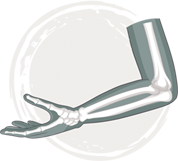
Hand and Wrist
Procedures

Hand and wrist procedures encompass a range of surgical procedures with the primary aim of restoring the health and mobility of the hand and wrist.
Types of Hand and Wrist Procedures We Specialise In

Carpal tunnel release
The carpal tunnel release, an outpatient procedure, is specifically designed to provide relief from carpal tunnel syndrome, a nerve-related disorder that can cause weakness, pain, and a tingling or numb sensation in the digits.
Depending on your eligibility, carpal tunnel release can be performed using either an open or endoscopic approach. Open surgery involves making a larger incision over the wrist to sever the carpal ligament, while endoscopic surgery is a less invasive option that uses a bendable scope to access the operative region.
With endoscopic surgery, a less invasive approach, the doctor carefully inserts a bendable scope (endoscope) with a light and camera attached at the end into one of the tiny incisions to access the operative region.
Cubital tunnel release
Cubital tunnel release, a minor surgical procedure, is a highly effective treatment for cubital tunnel syndrome. This disorder, which causes compression or irritation of the ulnar nerve, can be effectively alleviated through this procedure. By creating sufficient room for the nerve to move and enhancing blood flow, cubital tunnel release provides a reliable solution to the problem.
When conservative measures such as bracing, splinting, physical therapy, and pain medication prove ineffective, cubital tunnel release becomes the next step in the treatment process.
When conservative measures such as bracing, splinting, physical therapy, and pain medication prove ineffective, cubital tunnel release becomes the next step in the treatment process.
Trigger finger release
Trigger finger release, a surgical solution for trigger finger—a disorder that results in an abnormally bent finger, causing stiffness, tenderness, and a popping or clicking sensation—is an effective way to provide significant relief, easing your discomfort.
The surgery, a straightforward procedure, involves exposing the thickened sheath and releasing the pulley that is obstructing the flexor tendon. It is performed on an outpatient basis through a tiny incision over the palm of the hand.
The surgery, a straightforward procedure, involves exposing the thickened sheath and releasing the pulley that is obstructing the flexor tendon. It is performed on an outpatient basis through a tiny incision over the palm of the hand.
De Quervain’s release
De Quervain's release is a sign of hope for those suffering from De Quervain's tenosynovitis. This surgical procedure is designed to alleviate the debilitating disorder caused by swelling or inflammation of the tendon sheaths near the thumb side of the wrist. It offers relief from pain, difficulty twisting the wrist, and trouble gripping.
De Quervain's release surgery, a highly effective treatment for the pain and discomfort associated with the disorder, involves opening the dense tendon sheath and relieving pressure on the tendons near the thumb side of the wrist, providing much-needed relief.
De Quervain's release surgery, a highly effective treatment for the pain and discomfort associated with the disorder, involves opening the dense tendon sheath and relieving pressure on the tendons near the thumb side of the wrist, providing much-needed relief.
Dupuytren’s surgery
Dupuytren's surgery, with its high success rate, remains a highly effective treatment for Dupuytren’s contracture, a hand disorder characterised by the thickening of fibrous tissue in the palm, causing the fingers to bend abnormally inward.
There are several surgical approaches for Dupuytren’s contracture, such as a fasciectomy, which involves the surgical resection of the tissue layer known as the fascia. The procedure is designed to release the tightened, restricted tissue, allowing the fingers to move normally.
Needle aponeurotomy, another effective treatment approach, involves the careful and precise insertion of a tiny needle within the dense palm tissue. The needle is then manipulated to break up the abnormal tissue, allowing the fingers to straighten.
Dermofasciectomy, a highly reliable and extensive treatment technique, involves the surgical removal of skin and tissue from the palm region of the finger without damaging the nerves and tendons of the finger.
Tendon repair or grafting
Tendon repair is a surgical procedure that requires utmost care and precision, aimed at restoring damaged or ruptured tendons. This procedure is typically performed on an outpatient basis and involves suturing the ends of the damaged tendon. It involves the use of a tendon taken from another region of the body or a synthetic tendon.
Wrist arthroscopy
Wrist arthroscopy, a minimally invasive surgical technique, involves the use of a bendable, lighted scope with a camera attached at the end to view and repair tissue in or around the wrist. The less intrusive nature of the procedure means there is no need to create extensive cuts within the skin or tissue. This results in a faster recovery with significantly less pain, offering you a hopeful and relieved outlook compared to traditional surgery.
Joint fusion (arthrodesis)
Wrist fusion surgery (wrist arthrodesis) is a surgical procedure that helps conjoin the bones of the wrist. It’s often used to restore strength, mobility and function of the wrist from debilitating arthritis or severe traumatic injuries of the wrist. The surgery is adaptable, capable of involving only a specific segment of the wrist or the entire wrist, depending on the extent of the damage. This adaptability ensures that the procedure can be tailored to your specific needs, providing reassurance and confidence in its effectiveness.
Hand Fracture Fixation
Open reduction and internal fixation of hand fractures is a highly precise process that aims to fix broken bone pieces using specialised hardware such as plates and screws. The metal pieces fit snugly around the bone and are embedded deeply within the skin, so deeply that they are only visible on an X-ray. A majority of hand fractures heal well with sufficient rest and postoperative care.
Nerve repair or grafting
Upper limb nerve repair involves removing injured tissue from the end of the nerve, and tiny sutures are used to repair the nerve. This delicate task is made possible with the assistance of a specialised microscope, highlighting the crucial role of advanced technology in the procedure. Nerve grafting is a surgical procedure employed when there is extensive damage, such that the nerve endings fail to reconnect. In that case, a healthy portion of the nerve is taken from another region of the body to make the repair.
Ligament reconstruction
Wrist ligament reconstruction is often indicated when the wrist ligament is severely ruptured. Typically, an incision is made over the wrist joint to gain entry to the torn ligament. The key to this procedure is the use of a tendon graft, which acts as a replacement for the ruptured ligament. Specialised hardware, such as metal pins, is used to facilitate the repair while the area heals completely.
Arthroplasty (PIP or thumb CMC joints)
Thumb carpometacarpal (CMC) arthroplasty is a specialised procedure designed to bring relief to those suffering from thumb CMC arthritis. When there's a loss of cartilage in the joint that attaches the base of the thumb to the wrist, it can lead to significant pain. However, this procedure offers hope by aiming to restore the protective cushioning of the joint and facilitating seamless, pain-free movement.
Proximal interphalangeal (PIP) joint replacement, also known as PIP arthroplasty, is a surgical procedure that offers a path to restored movement. By replacing a damaged PIP joint with a synthetic one, this procedure aims to reduce pain and facilitate the return of movement to the joint, giving patients a renewed sense of mobility and freedom.
Proximal interphalangeal (PIP) joint replacement, also known as PIP arthroplasty, is a surgical procedure that offers a path to restored movement. By replacing a damaged PIP joint with a synthetic one, this procedure aims to reduce pain and facilitate the return of movement to the joint, giving patients a renewed sense of mobility and freedom.
Ganglion cyst excision
Ganglion cyst excision is the surgical removal of a ganglion cyst, a benign, fluid-filled bump that develops on the hands. This procedure, known for its precision, can bring significant relief to patients, as a ganglion cyst can increase pressure on a nerve, causing pain, or it may even limit one’s movement. Ganglion cyst resection involves the removal of the cyst capsule or stalk to ensure the entire cyst is removed.
Tenolysis
Tenolysis is a surgical procedure that involves releasing the tendon from adhesions. Due to surgery or an injury, the tendons responsible for bending and straightening the fingers become entangled in the scar tissue, preventing the seamless motion of the fingers.
Scaphoid non-union reconstructions
Scaphoid non-union reconstructions resolve failed scaphoid fractures through the use of bone grafting and internal fixation, aiming to facilitate healing and restore wrist function.
Rheumatoid hand soft tissue reconstruction
Rheumatoid reconstruction of the hand aims to treat joint abnormalities that result from rheumatoid arthritis. These surgical procedures resolve pain, alleviate pressure and correct cosmetic abnormalities associated with the disorder.
QUALIFICATIONS
MBChB (Stell), FCS(SA) Orth, MMed (UCT)
PRACTICE NO. 1211749
MP0762270
CONTACT DETAILS
| +27 (0)41 373 6114 | |
| Send us an Email | |
| reception@drpbotha.com | |
| Suite 202, Life St George's Hospital 40 Park Drive, Central Gqeberha/Port Elizabeth, 6001 |