
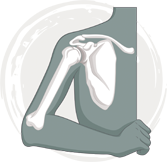
SHOULDER
CONDITIONS

The shoulder, a highly mobile component of the body, is a flexible yet complex joint. It facilitates articulation between the humerus, the long upper arm bone and the scapula, the shoulder blade.
Unfortunately, the shoulder, being a flexible joint, is particularly vulnerable to injury, often due to overuse.

Rotator cuff tear
The rotator cuff, a system of tendons and muscles that envelop the shoulder joint, is responsible for the mobility and stability of the shoulder. An injury to this intricate system can result in dull, aching pain in the shoulder, prompting a visit to a healthcare professional.
A rotator cuff injury, which becomes more likely with age or due to high-impact, overhead activities, can cause a variety of symptoms. These may include a dull, persistent ache in the shoulder, disrupted sleep patterns, and difficulty in performing simple tasks like reaching behind your back or combing your hair.
When a rotator cuff tear occurs, it can severely limit the mobility of your arm and cause intense shoulder pain. Whether the tear is partial or complete, a thorough diagnostic assessment, including an X-ray, ultrasound, or MRI, is essential to accurately determine the severity of the tear.
Shoulder impingement syndrome
Shoulder impingement, a condition where the shoulder tendon swells and rubs painfully against tissue and bone, causing pain when raising the arm, is a common issue. The pain is typically felt at the top of the shoulder and the exterior of the joint, and may worsen at night or when lifting the arm over the head.
Thankfully, treatment for shoulder impingement is designed to significantly reduce pain and enhance the range of motion of the shoulder, offering hope for a more comfortable and active life.
Thankfully, treatment for shoulder impingement is designed to significantly reduce pain and enhance the range of motion of the shoulder, offering hope for a more comfortable and active life.
Frozen shoulder (adhesive capsulitis)
Frozen shoulder, a progressive degenerative disorder, causes shoulder stiffness and pain in the joint. It's essential to recognise that the symptoms of frozen shoulder tend to worsen over time, especially without a treatment plan in place. However, this progression is a natural part of the disorder and not a cause for immediate concern.
It's crucial to understand that frozen shoulder is not a cause for serious concern. Non-surgical treatments, such as physical therapy and corticosteroids, are highly effective in significantly reducing pain and improving the range of motion in the shoulder. It's reassuring to know that in some rare cases, minimally invasive surgery remains a treatment option.
It's crucial to understand that frozen shoulder is not a cause for serious concern. Non-surgical treatments, such as physical therapy and corticosteroids, are highly effective in significantly reducing pain and improving the range of motion in the shoulder. It's reassuring to know that in some rare cases, minimally invasive surgery remains a treatment option.
Shoulder dislocation or instability
Shoulder instability is a disorder whereby the shoulder joint lining, the labrum or ligaments, become overly stretched or torn. Early detection and intervention are key; as a result, the humeral head (the ball of the shoulder) shifts partially or completely out of the socket. Those with shoulder instability may be able to feel the shoulder give way. Additional signs include bruising, swelling, and a reduced range of motion in the shoulder.
When the shoulder remains unstable and loose despite physical therapy, doctors may consider activity modification or, in advanced cases, surgery. However, it's important to note that physical therapy is often highly effective in stabilising the shoulder, providing hope for a successful recovery.
When the shoulder remains unstable and loose despite physical therapy, doctors may consider activity modification or, in advanced cases, surgery. However, it's important to note that physical therapy is often highly effective in stabilising the shoulder, providing hope for a successful recovery.
Separated shoulder (AC joint injury)
A separated shoulder (acromioclavicular joint injury) refers to an injury that involves impact to the AC joint, the point where the collarbone and acromion meet. A direct injury to the acromioclavicular joint develops when the ligaments between the point of the collarbone and acromion begin to stretch or tear.
Fortunately, both conservative and surgical treatment options are available, depending on the severity of the injury.
Fortunately, both conservative and surgical treatment options are available, depending on the severity of the injury.
Clavicle (collarbone) fracture
Remember, a collarbone fracture occurs when there’s an accidental break in the collarbone. The collarbone, also known by medical professionals as the clavicle, attaches the shoulder blade to the breastbone. Usually, a traumatic injury of this kind may occur from motor vehicle accidents, assaults or unexpected falls. If you notice any of the common signs of a broken collarbone, including pain that intensifies when moving the shoulder, bruising, tenderness, swelling in the affected area, a crackling or grinding noise when the shoulder is moved, limited mobility of the shoulder, and shoulder stiffness, it's important to seek medical attention promptly.
Rest assured, surgery is often advised if the collarbone pierces through the skin, is broken into several fragments or remains out of proper alignment. Surgeons use specialised hardware, such as rods, screws, and plates, to secure the bone in place while it heals, ensuring the best possible outcome for your recovery.
Rest assured, surgery is often advised if the collarbone pierces through the skin, is broken into several fragments or remains out of proper alignment. Surgeons use specialised hardware, such as rods, screws, and plates, to secure the bone in place while it heals, ensuring the best possible outcome for your recovery.
Shoulder arthritis (osteoarthritis or rheumatoid)
Shoulder arthritis, a progressive disorder, may be categorised as rheumatoid arthritis, an autoimmune disorder or osteoarthritis, a degenerative condition. Shoulder arthritis often results in shoulder pain, limited shoulder movement, shoulder stiffness, and a cracking or grinding noise at the shoulder; these noises may occur due to cartilage loss associated with the disorder.
One of the most effective tools in managing arthritis symptoms is adopting a healthy lifestyle. These changes, along with activity modification, prescription medications, and in severe cases, surgery, can help you take control of your condition and improve your quality of life.
One of the most effective tools in managing arthritis symptoms is adopting a healthy lifestyle. These changes, along with activity modification, prescription medications, and in severe cases, surgery, can help you take control of your condition and improve your quality of life.
Biceps tendonitis
Biceps tendonitis, a disorder which arises from inflammation of the upper biceps tendon, is a type of injury that occurs from excessive overhead activities. If you suffer from biceps tendonitis, you may experience tenderness in the region or biceps pain. The pain usually intensifies with physical activity or overhead arm lifting on a regular basis. There are conservative treatment options such as non-steroidal anti-inflammatories to manage pain, sufficient rest, and a crucial part of the recovery process, physical therapy. Physical therapy empowers you to actively participate in your recovery, along with the use of cold applications. However, should non-surgical treatment methods prove ineffective, surgeons may suggest arthroscopic surgery.
SLAP tear (superior labral tear)
A Superior Labrum Anterior to Posterior (SLAP) tear is a traumatic injury which impacts the labrum of the shoulder, the cartilage rim which envelops the shoulder socket and plays a crucial role in stabilising the upper arm bone. A SLAP tear forms when a cartilage tear occurs in the inside of the shoulder.
Treatment for a SLAP tear depends on the extent of damage done, which is decided upon following an extensive examination of the labrum. There are conservative treatment options such as physical therapy and the use of anti-inflammatories for pain management. Surgery may be considered in severe cases when repair of the labrum is necessary.
Treatment for a SLAP tear depends on the extent of damage done, which is decided upon following an extensive examination of the labrum. There are conservative treatment options such as physical therapy and the use of anti-inflammatories for pain management. Surgery may be considered in severe cases when repair of the labrum is necessary.
Calcific tendonitis
Calcific tendonitis occurs when calcium deposits accumulate in the tendons and muscles. Inflammation of these deposits results in pain and typically occurs in any region of the body, but most commonly affects the shoulder joint. The calcium deposits may accumulate in a single region of the body or develop in multiple regions. When the deposits grow larger or become irritated, it may intensify the pain. Fortunately, apart from conservative treatment measures such as non-steroidal anti-inflammatories, physical therapy and steroid injections, doctors may consider alternative treatments such as extracorporeal shockwave therapy (ESWT), lavage treatment, therapeutic ultrasound or surgery when conservative treatments are ineffective. It's important to note that the type of treatment depends not only on the extent of the condition but also on your eligibility, making your involvement in the treatment process crucial.
Glenohumeral joint instability
Glenohumeral instability refers to an unstable humeral head within the glenoid fossa. It may occur from a traumatic rupture of the capsule and surrounding ligaments or the looseness of the soft tissue.
Labral tear
The labrum is a cartilage ring that lines and stabilises the ball and socket of the shoulder. Unfortunately, a rupture in this specialised cartilage results in shoulder instability and pain. In addition, it results in a locking or grinding sensation when mobilising the shoulder joint.
Treatment for a labral tear depends on its severity and your eligibility for the procedure. With sufficient rest and the empowering support of physical therapy, it’s possible to recover fully. Again, however, it depends on the severity of the tear.
Treatment for a labral tear depends on its severity and your eligibility for the procedure. With sufficient rest and the empowering support of physical therapy, it’s possible to recover fully. Again, however, it depends on the severity of the tear.
Subacromial bursitis
Shoulder bursitis, a disorder arising from inflammation of the bursae, can cause shoulder pain, swelling, and stiffness, as well as a limited range of motion and warmth over the joint. However, with various treatment methods, such as timely applications of ice, corticosteroids to relieve pain, and joint aspiration to drain excess fluid from the bursae, along with the empowering role of physical therapy in strengthening the muscles of the shoulder and joint, you can take control of your condition.
QUALIFICATIONS
MBChB (Stell), FCS(SA) Orth, MMed (UCT)
PRACTICE NO. 1211749
MP0762270
CONTACT DETAILS
| +27 (0)41 373 6114 | |
| Send us an Email | |
| reception@drpbotha.com | |
| Suite 202, Life St George's Hospital 40 Park Drive, Central Gqeberha/Port Elizabeth, 6001 |